Concrete Road Sawing
Concrete Road Sawing Experts in Sydney
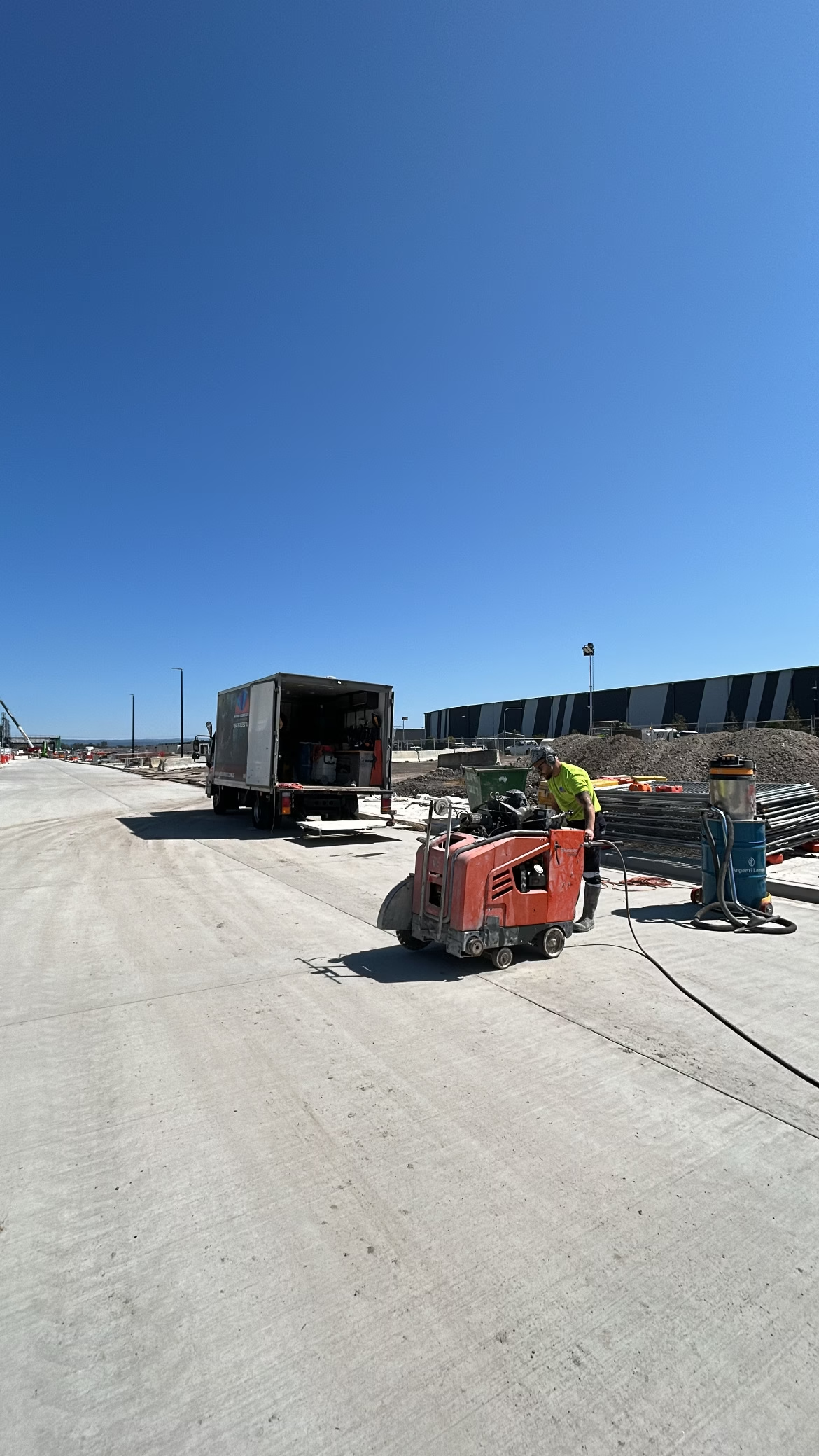
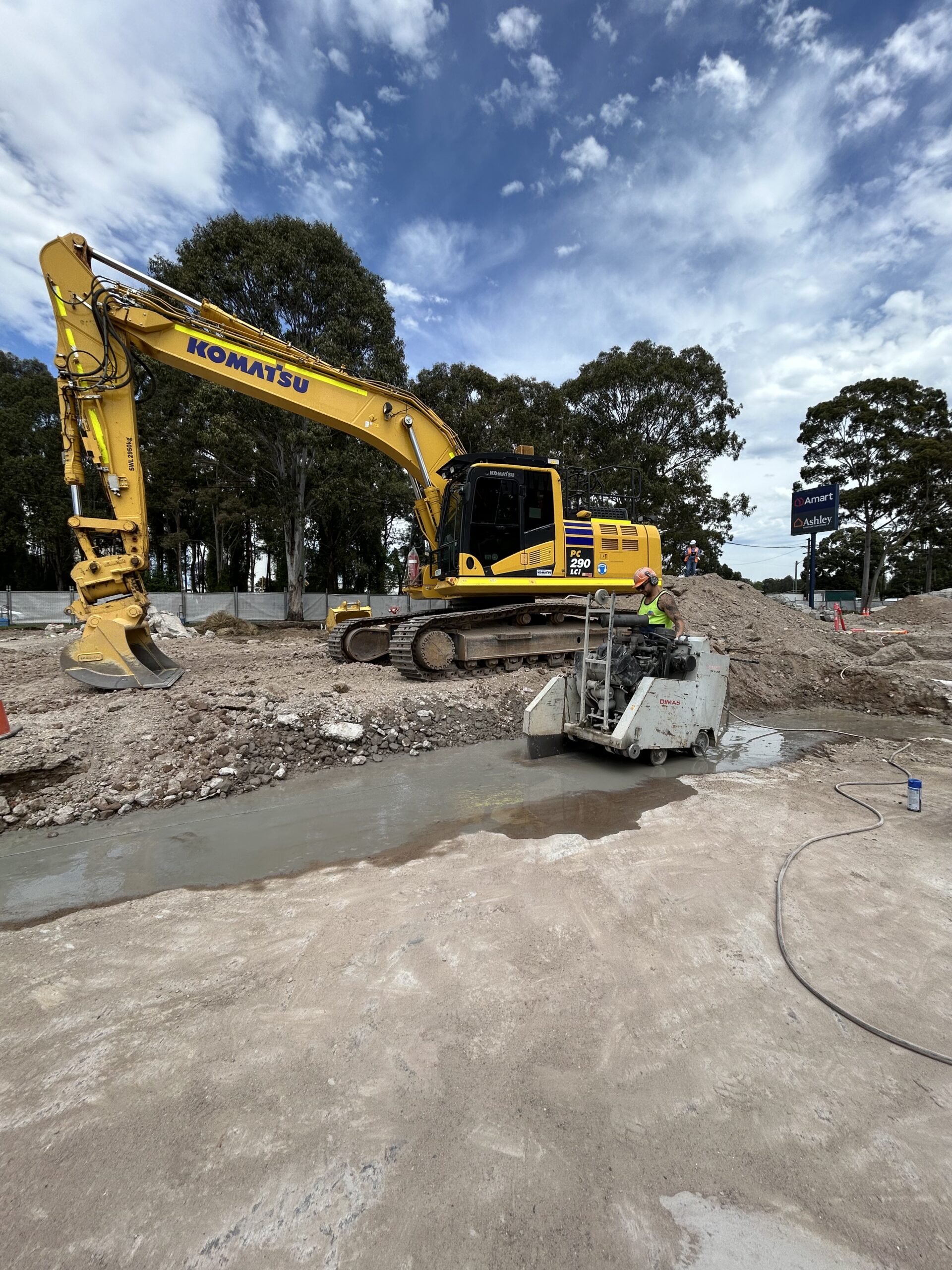
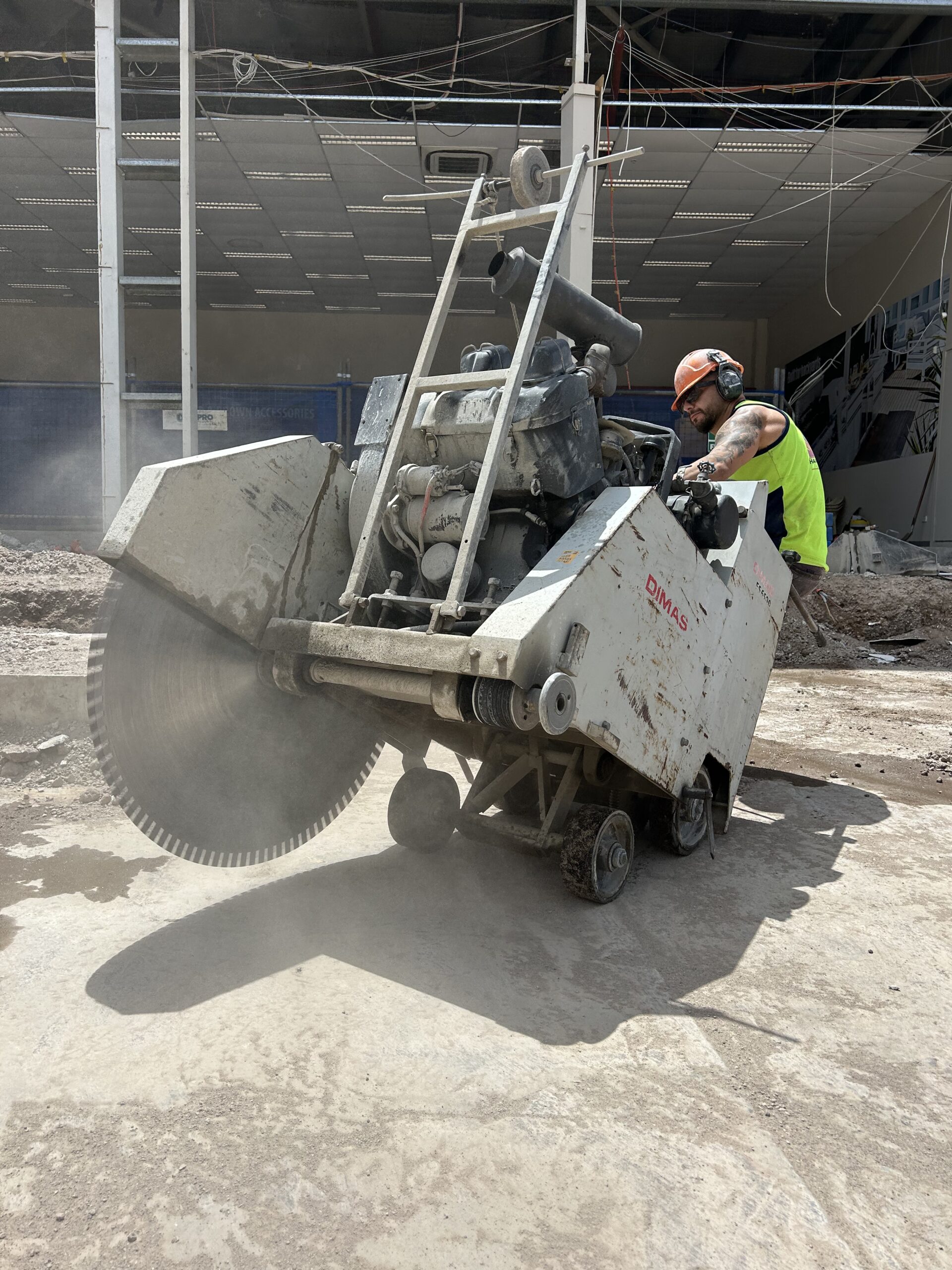
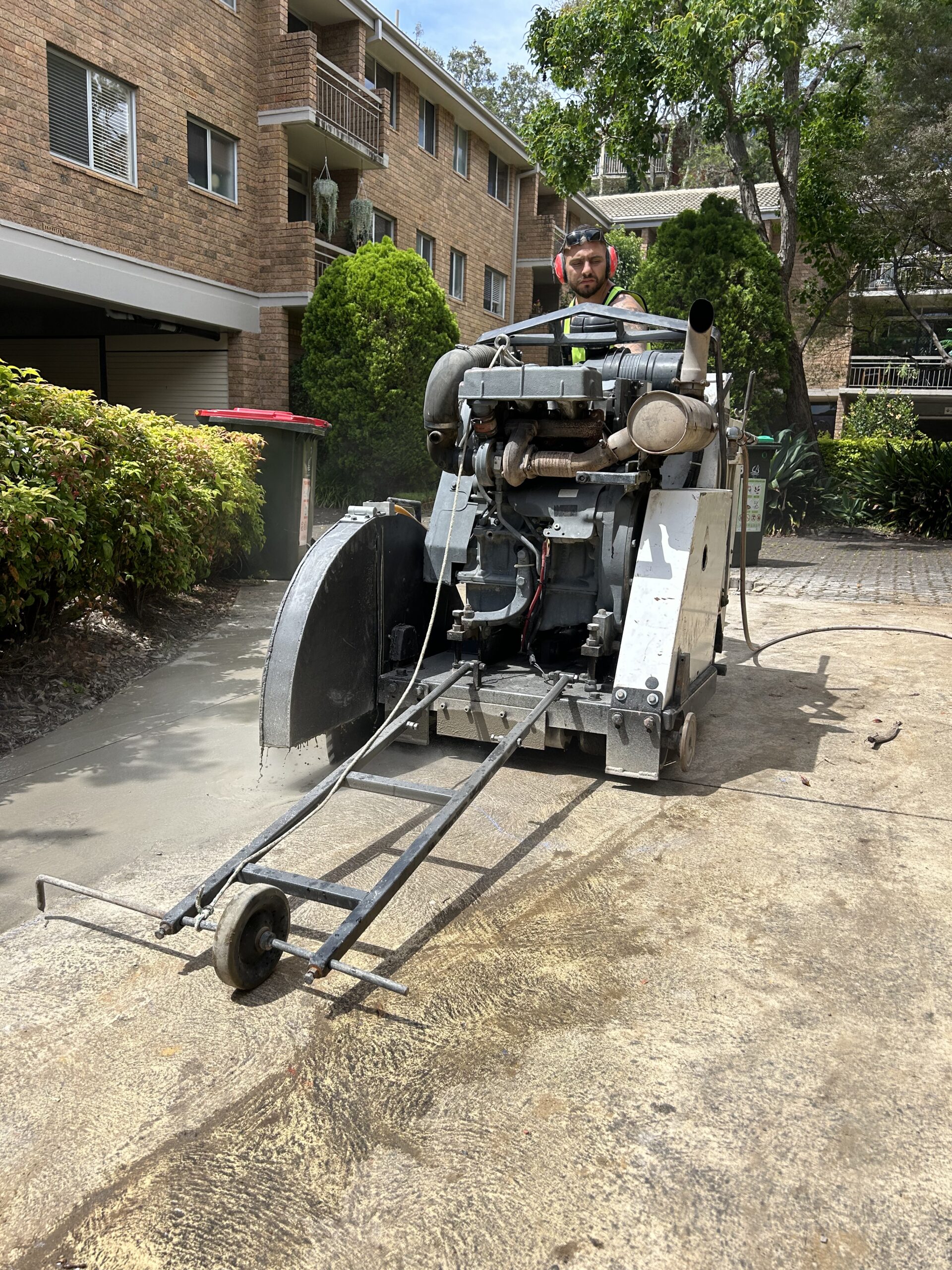
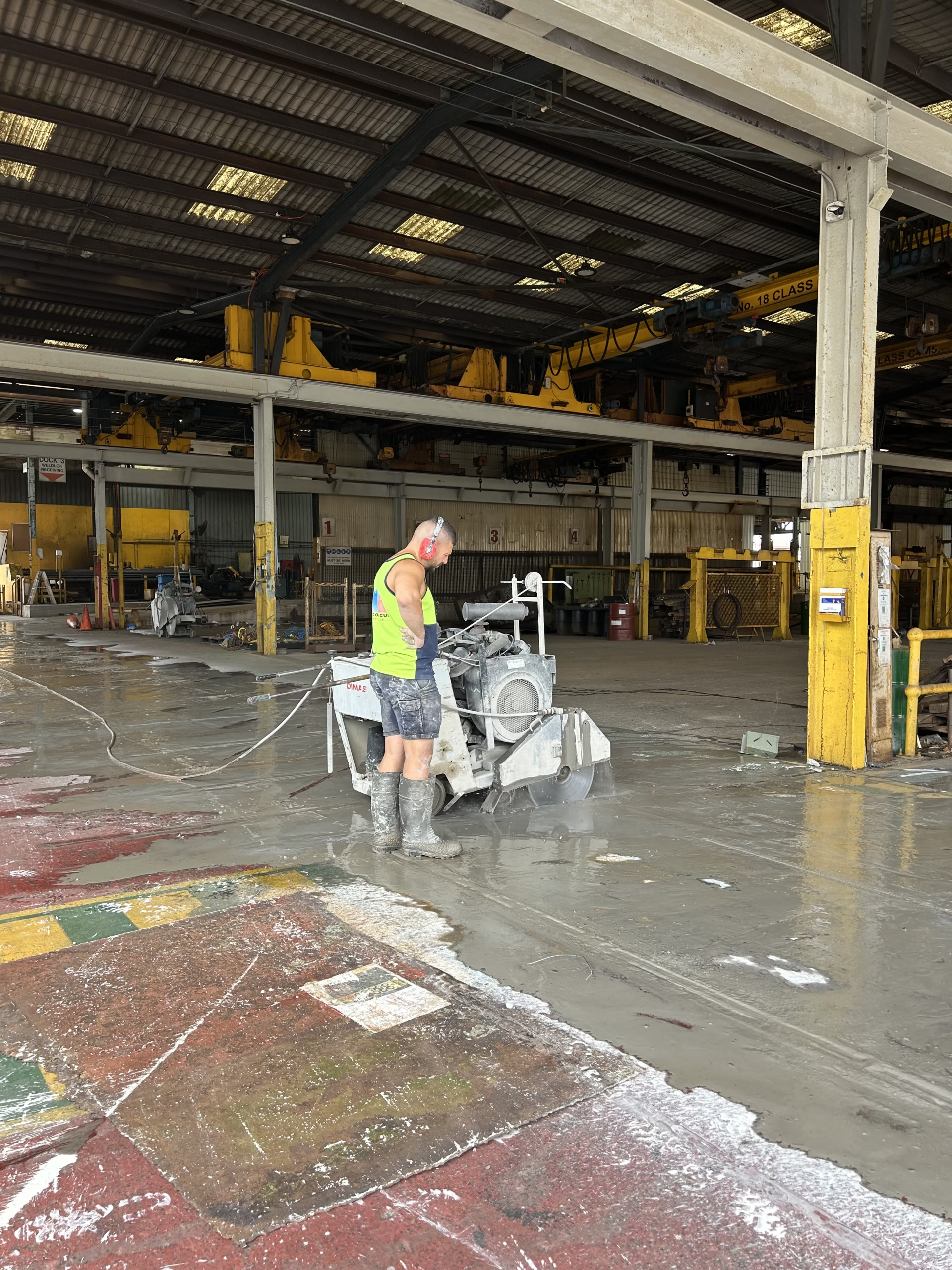
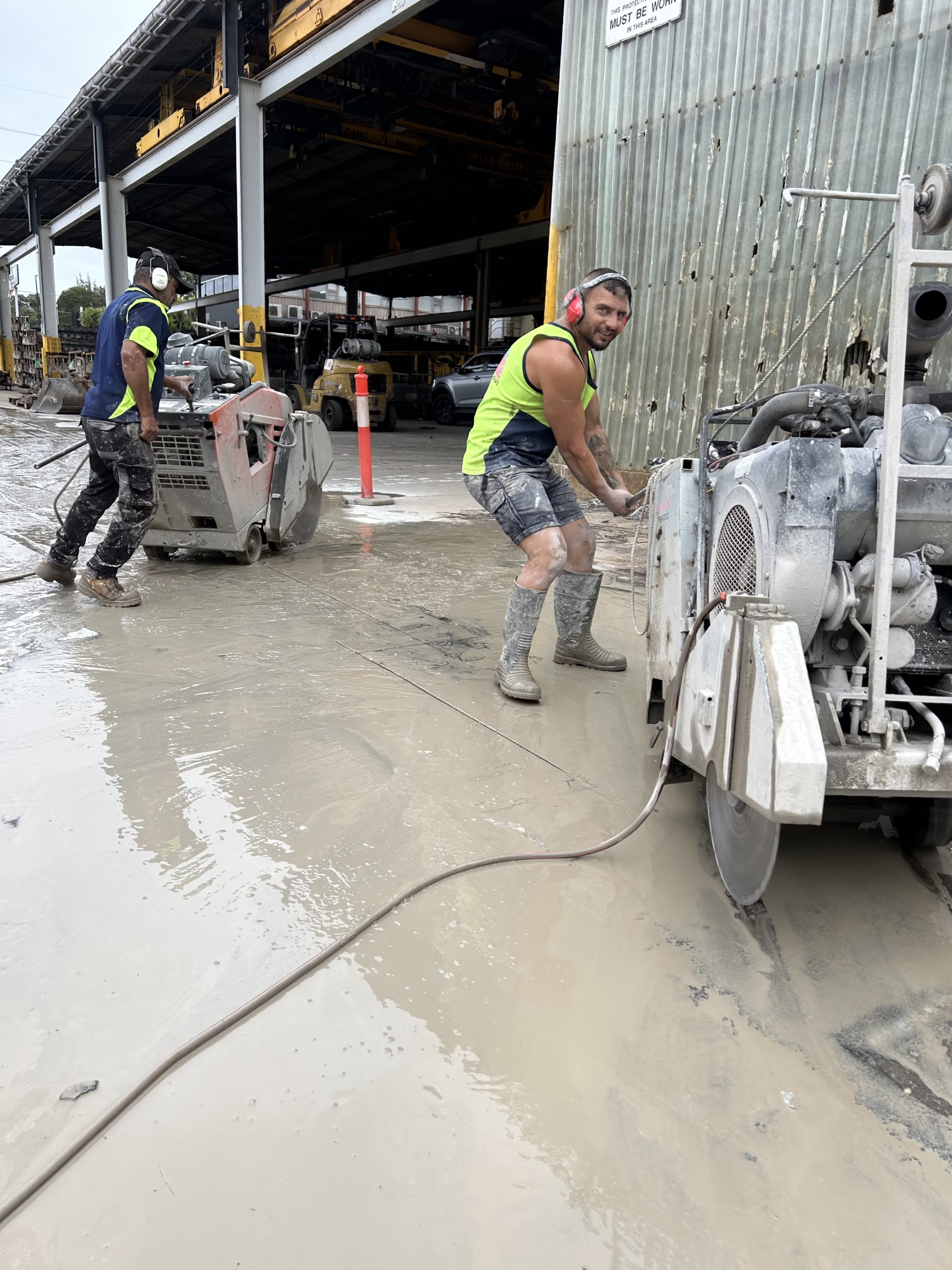
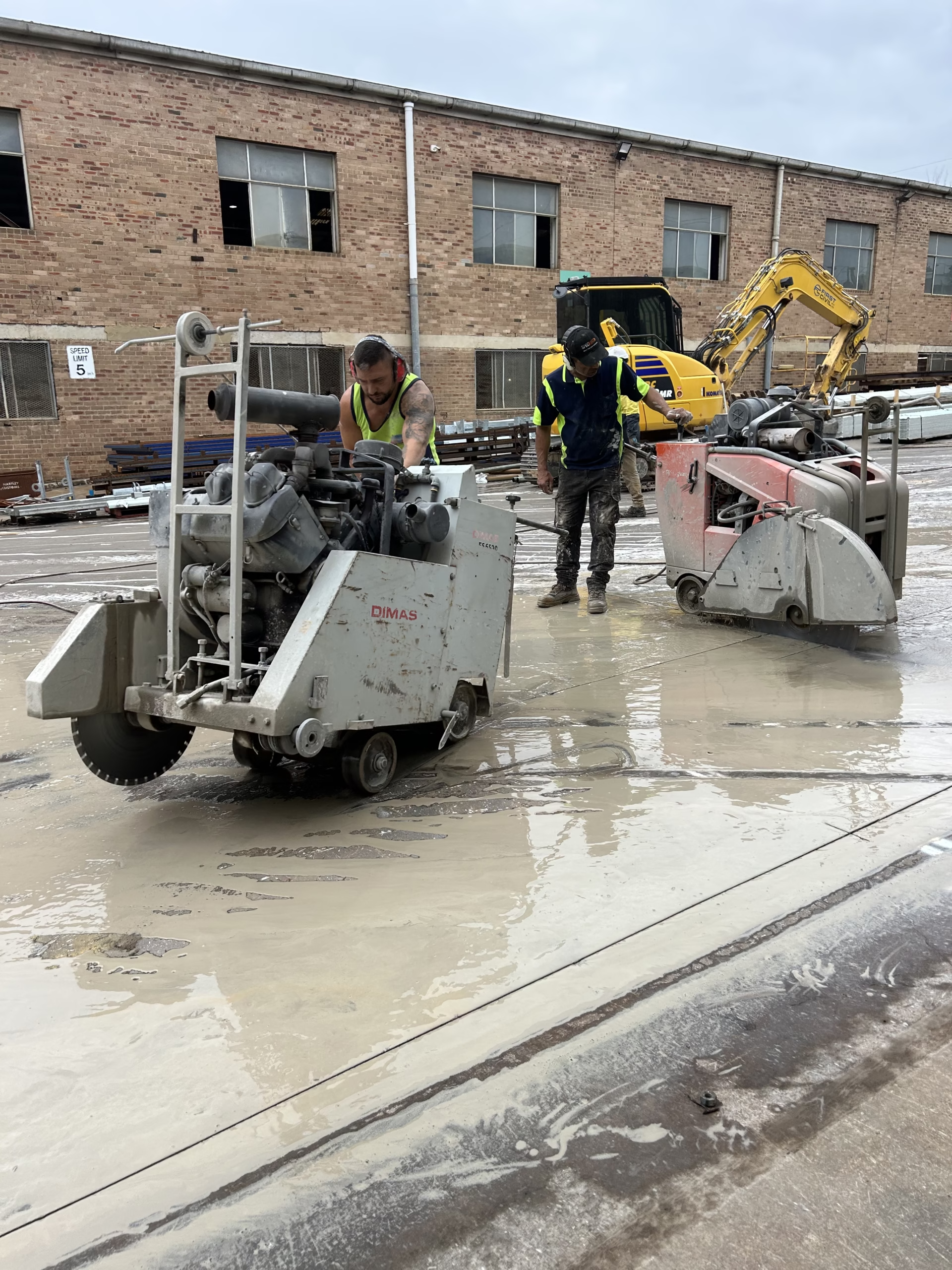
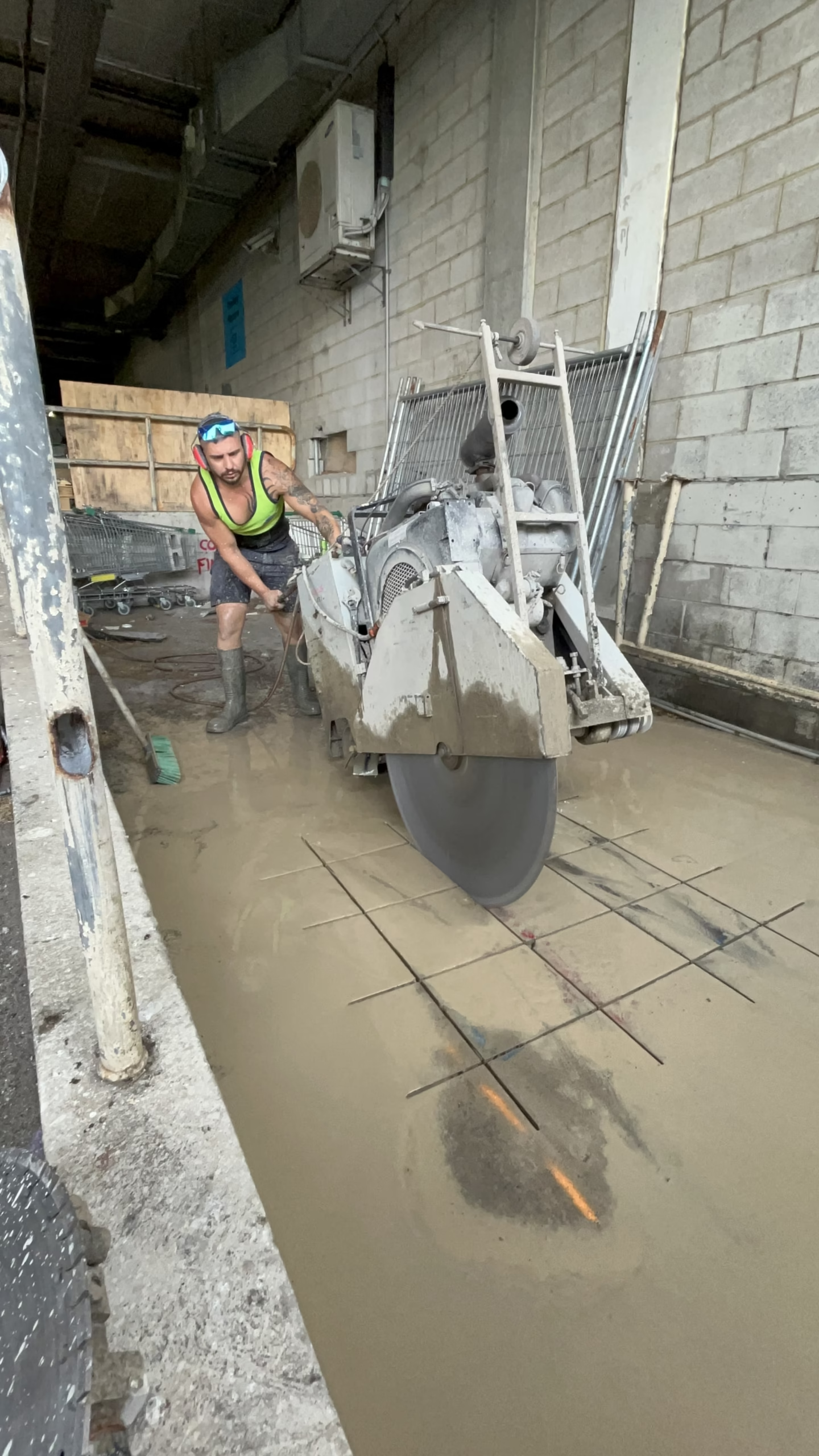
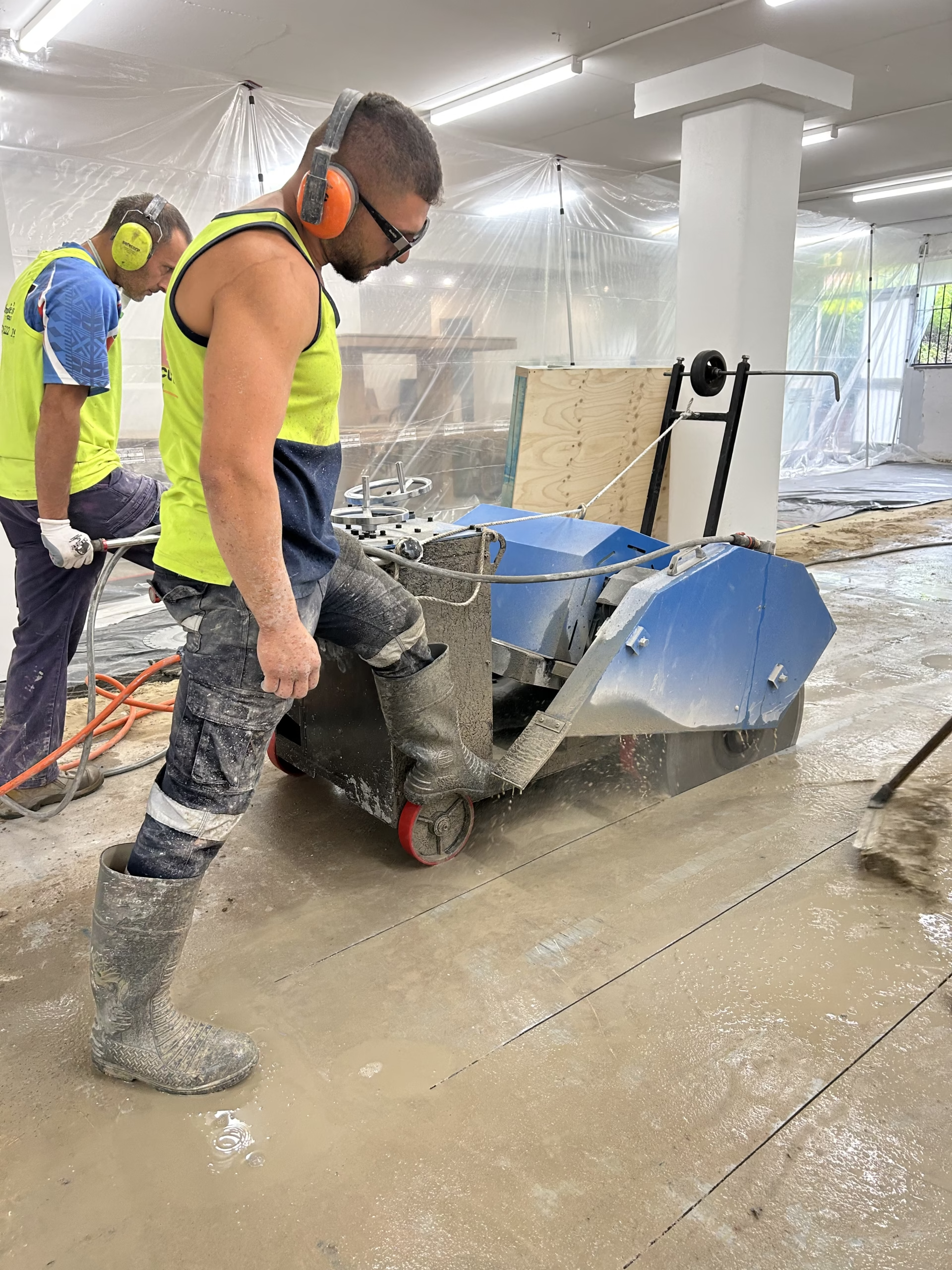
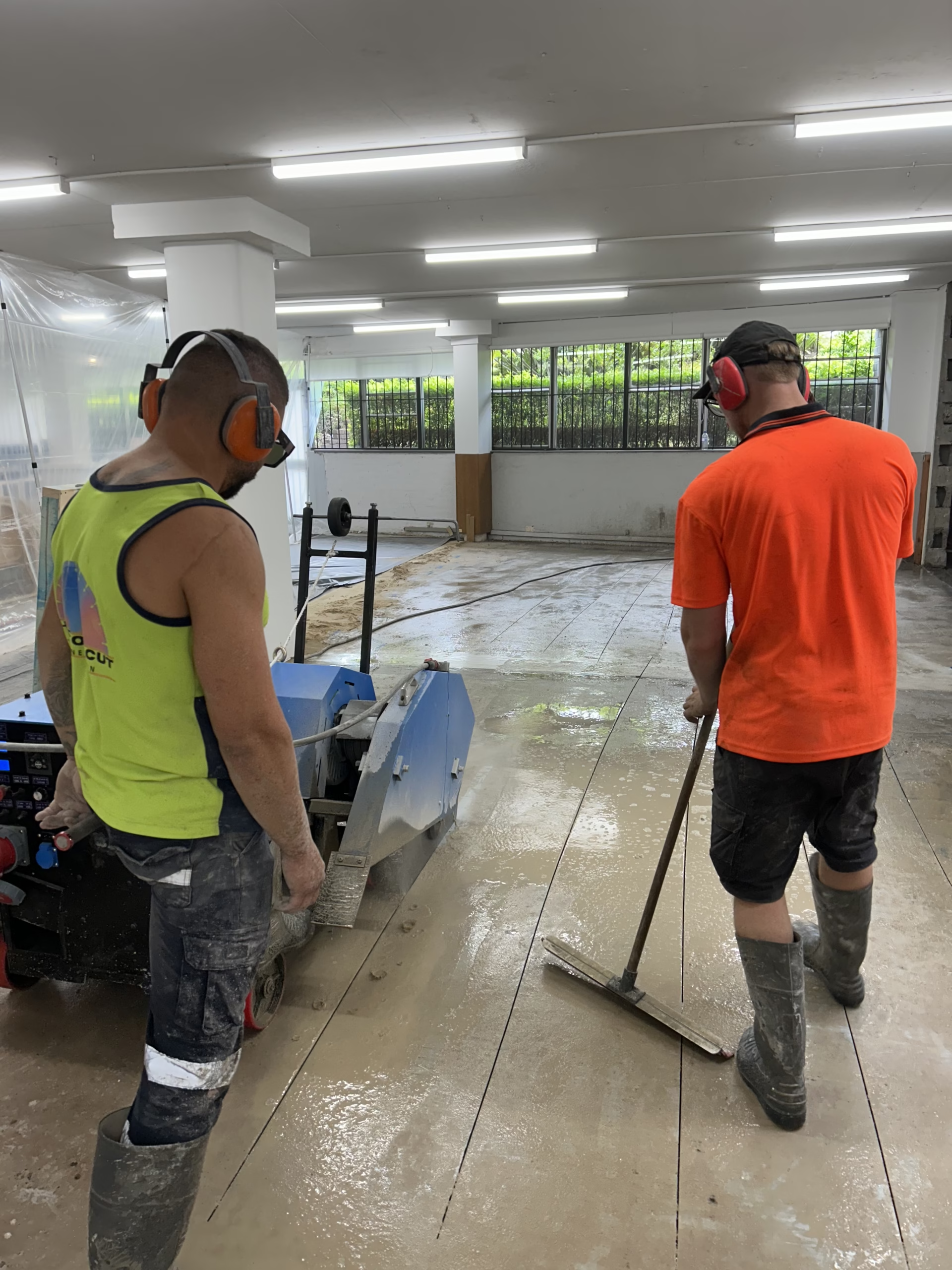
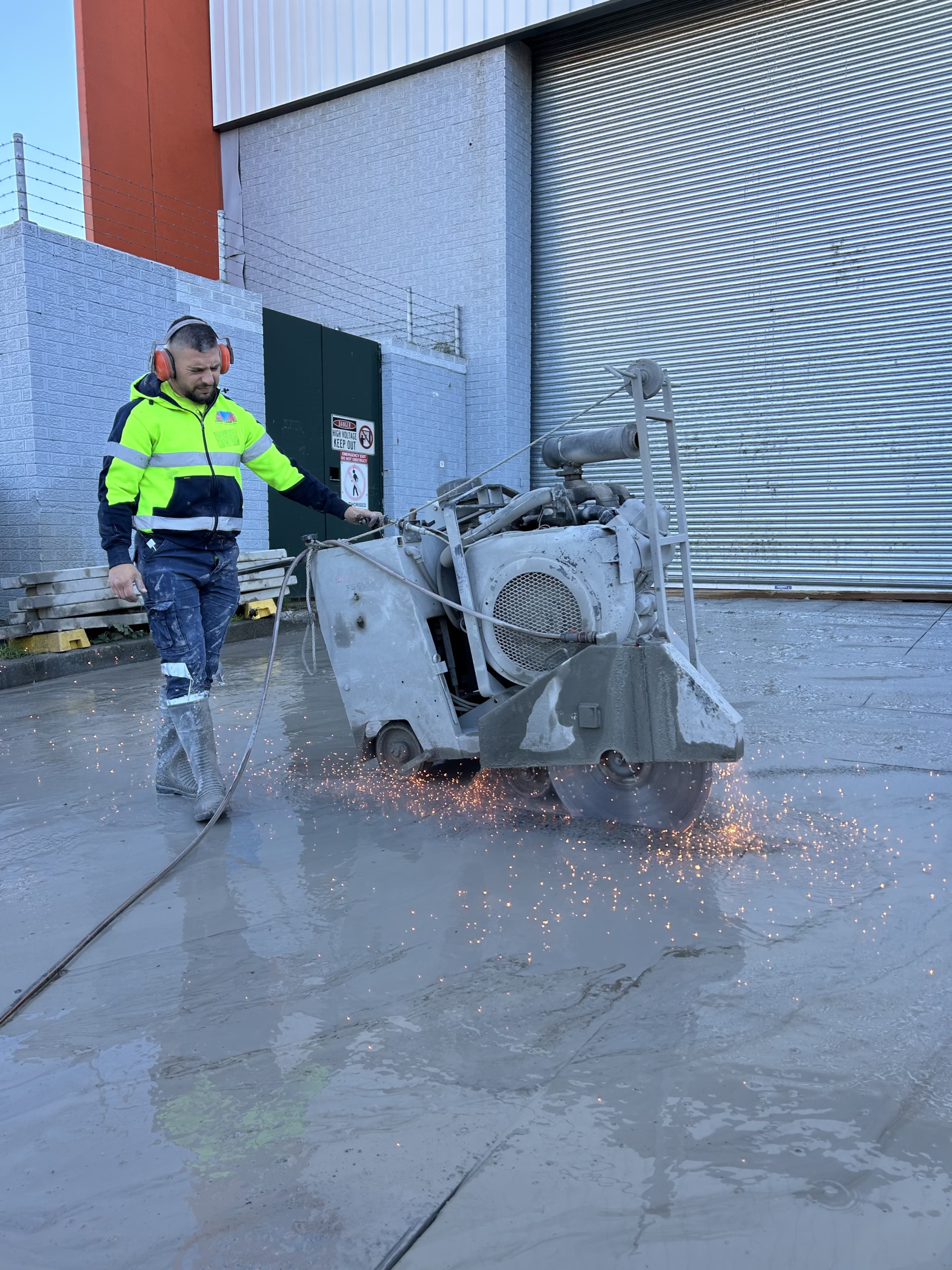
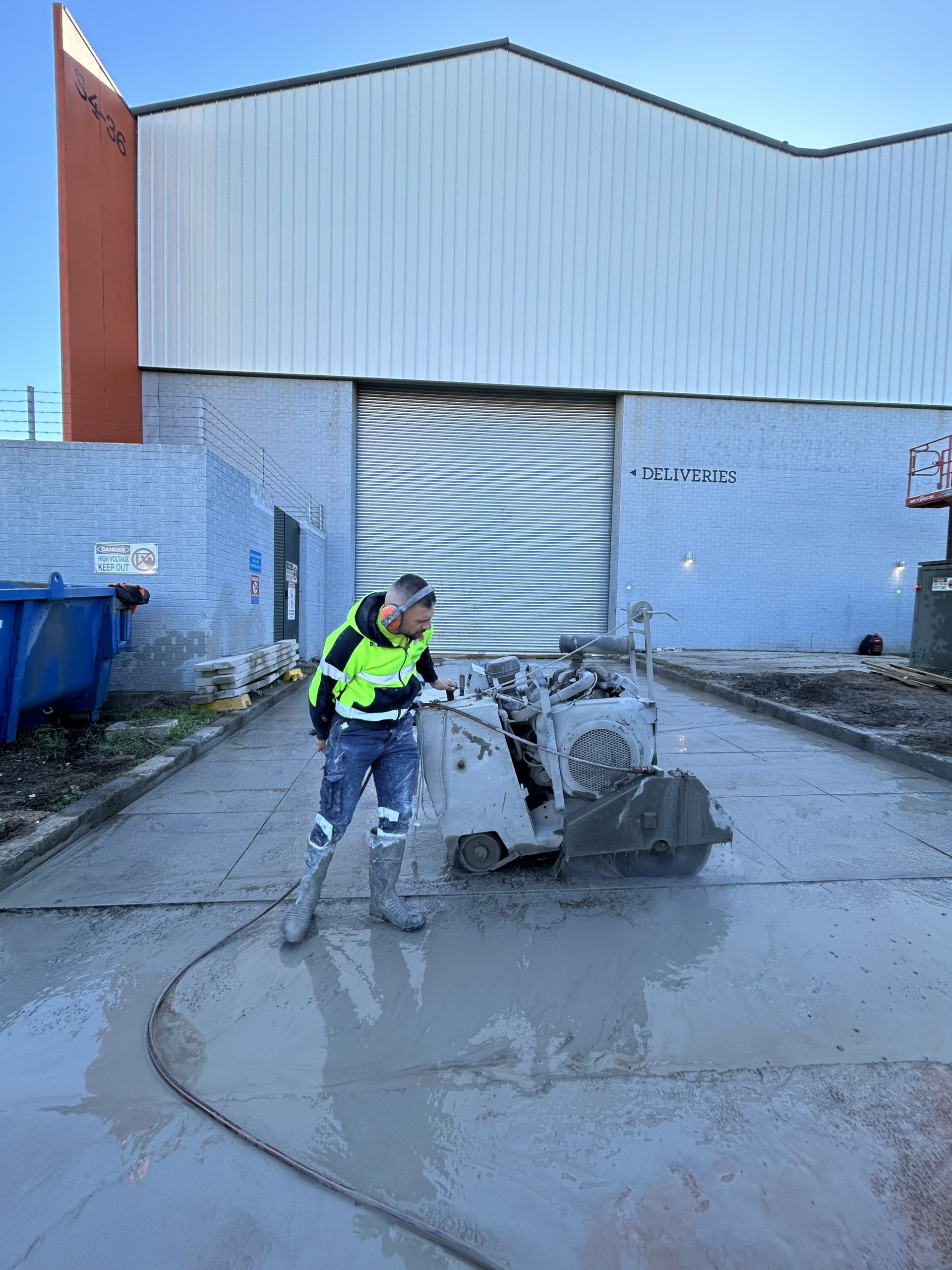
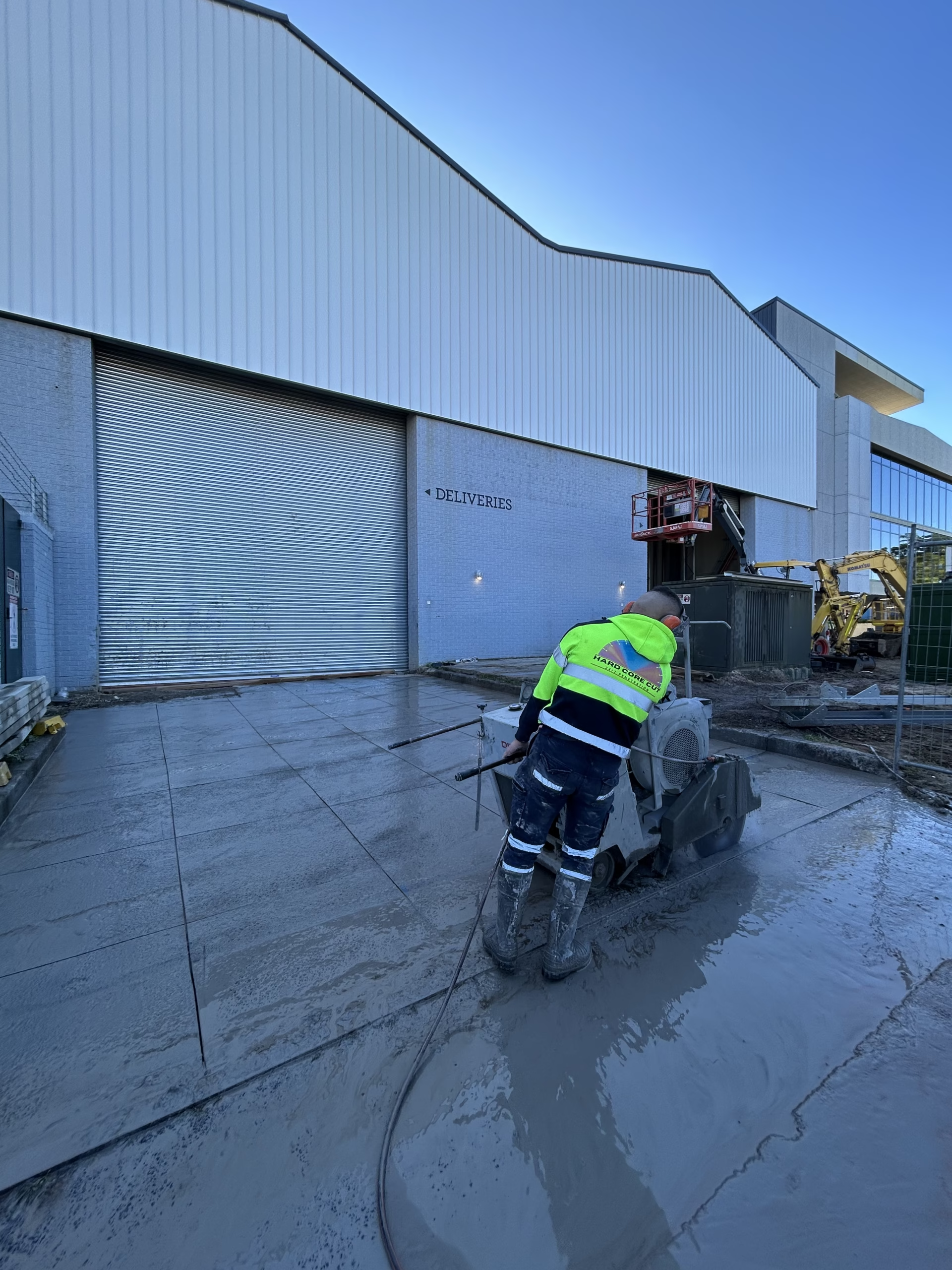
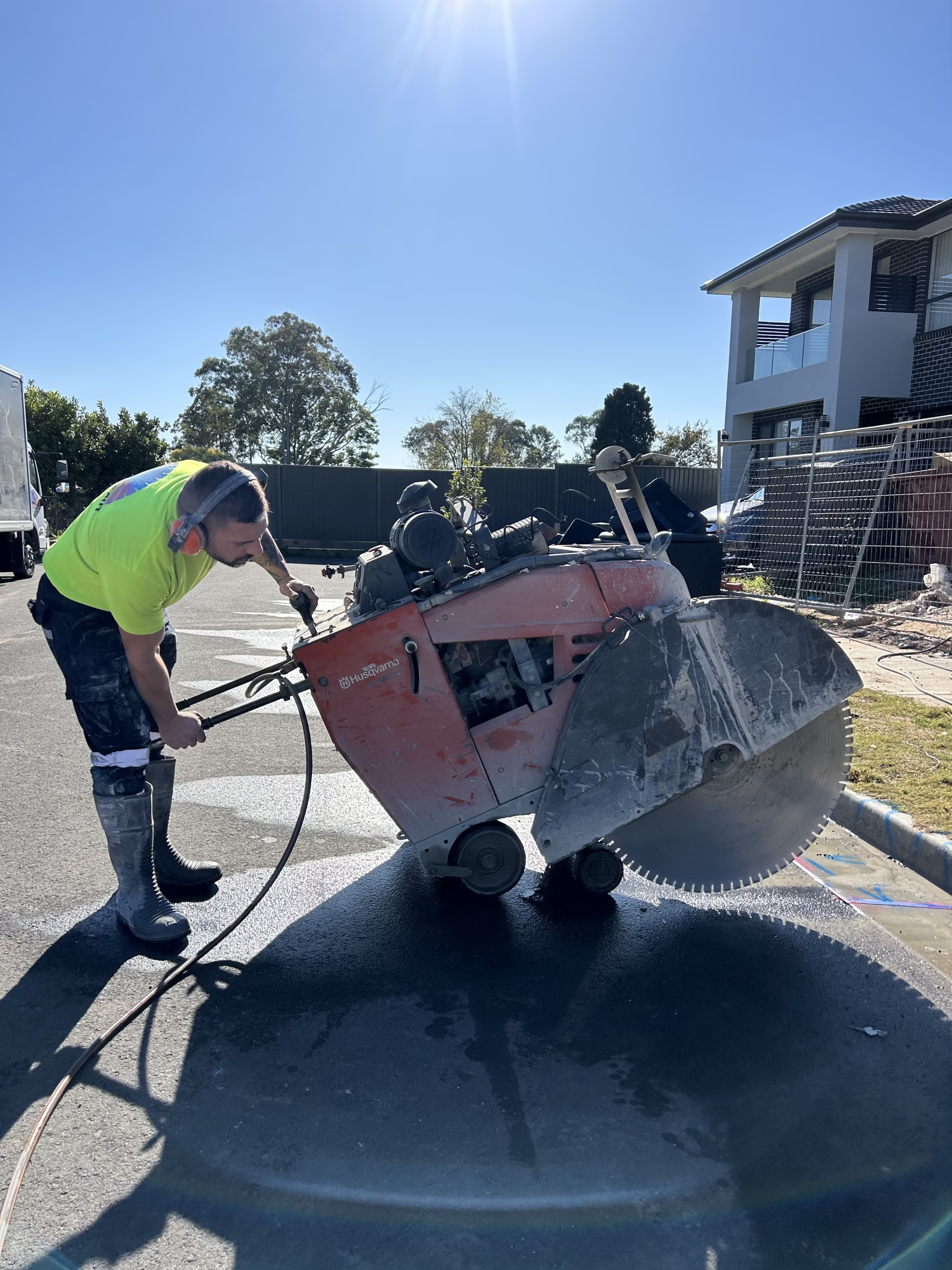
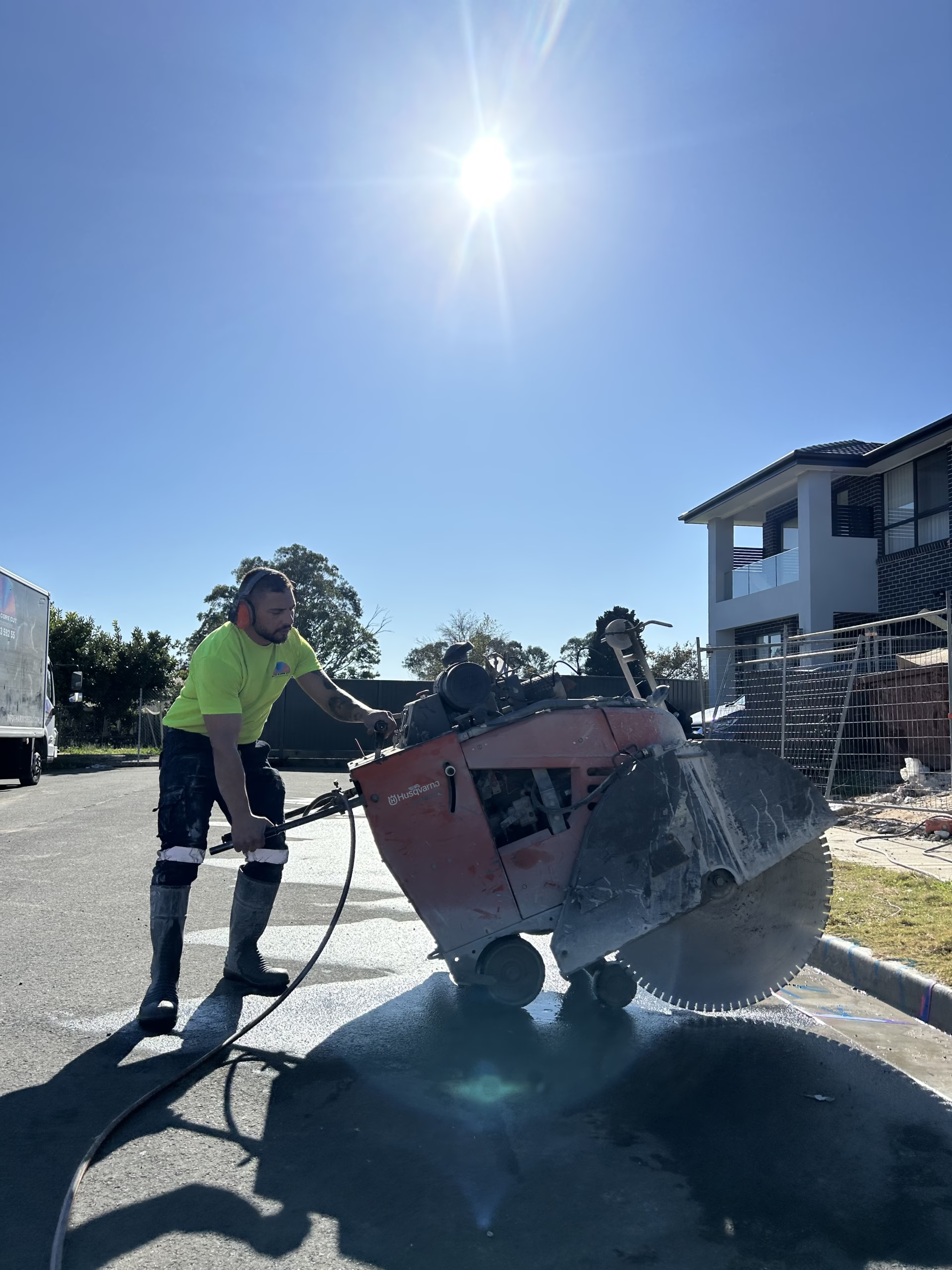
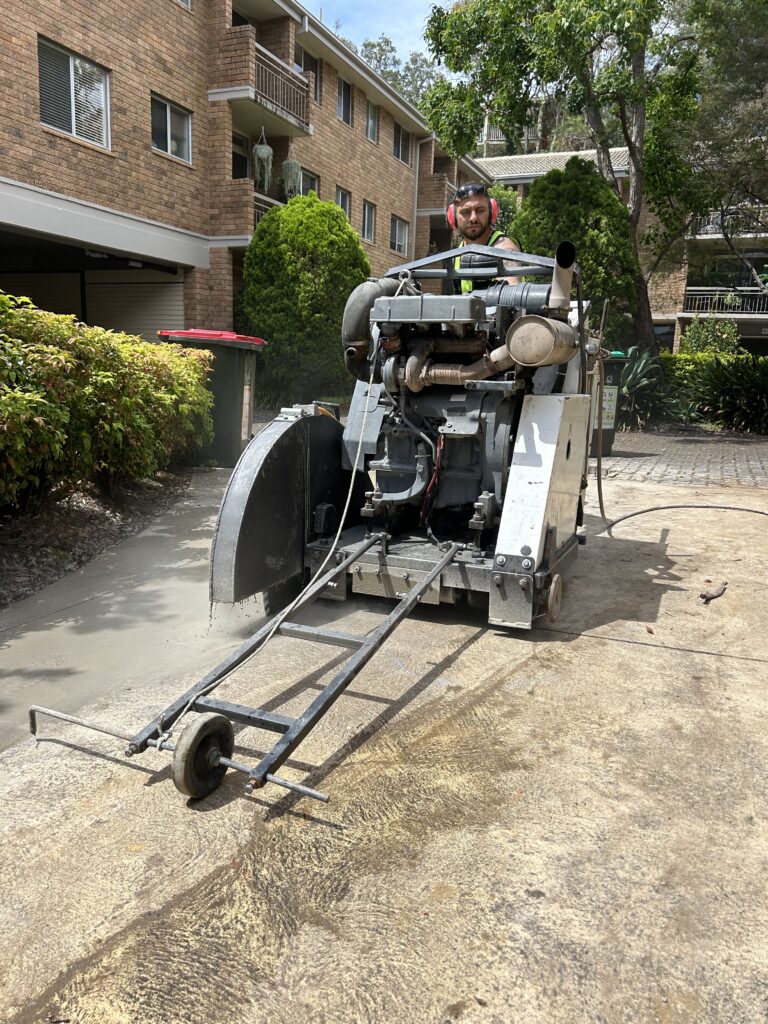
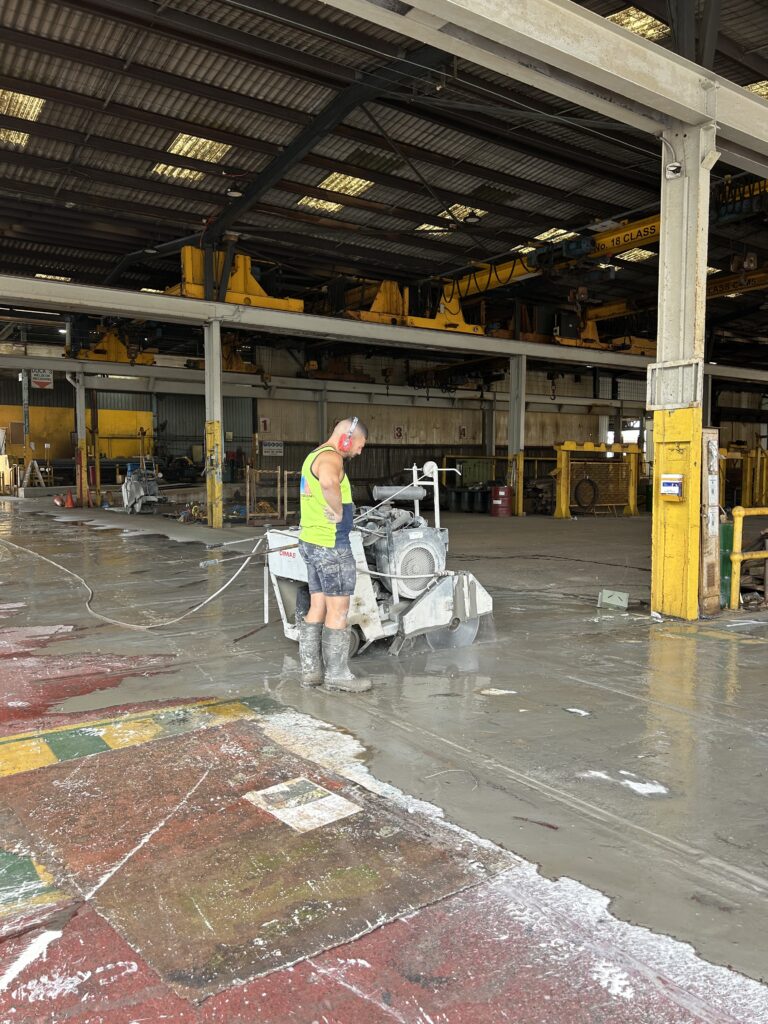
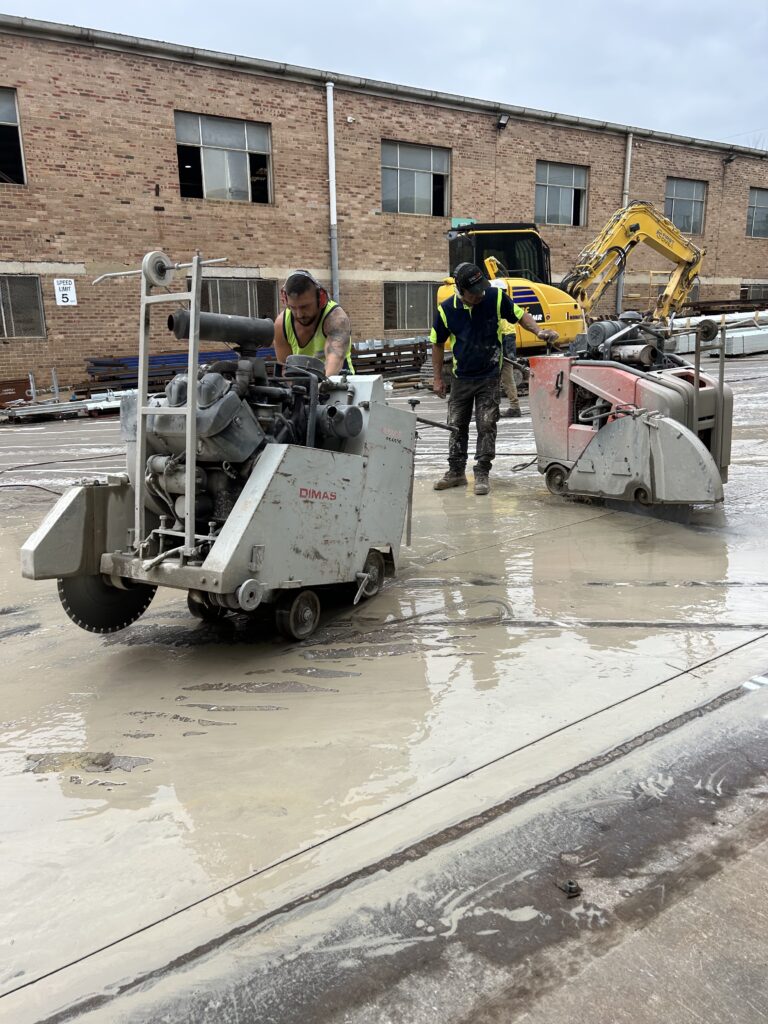
Road sawing (also called floor sawing or flat sawing) is a concrete-cutting method that uses a large walk-behind saw to cut horizontal surfaces such as concrete slabs, roads, pavements, bridge decks, and airport runways.
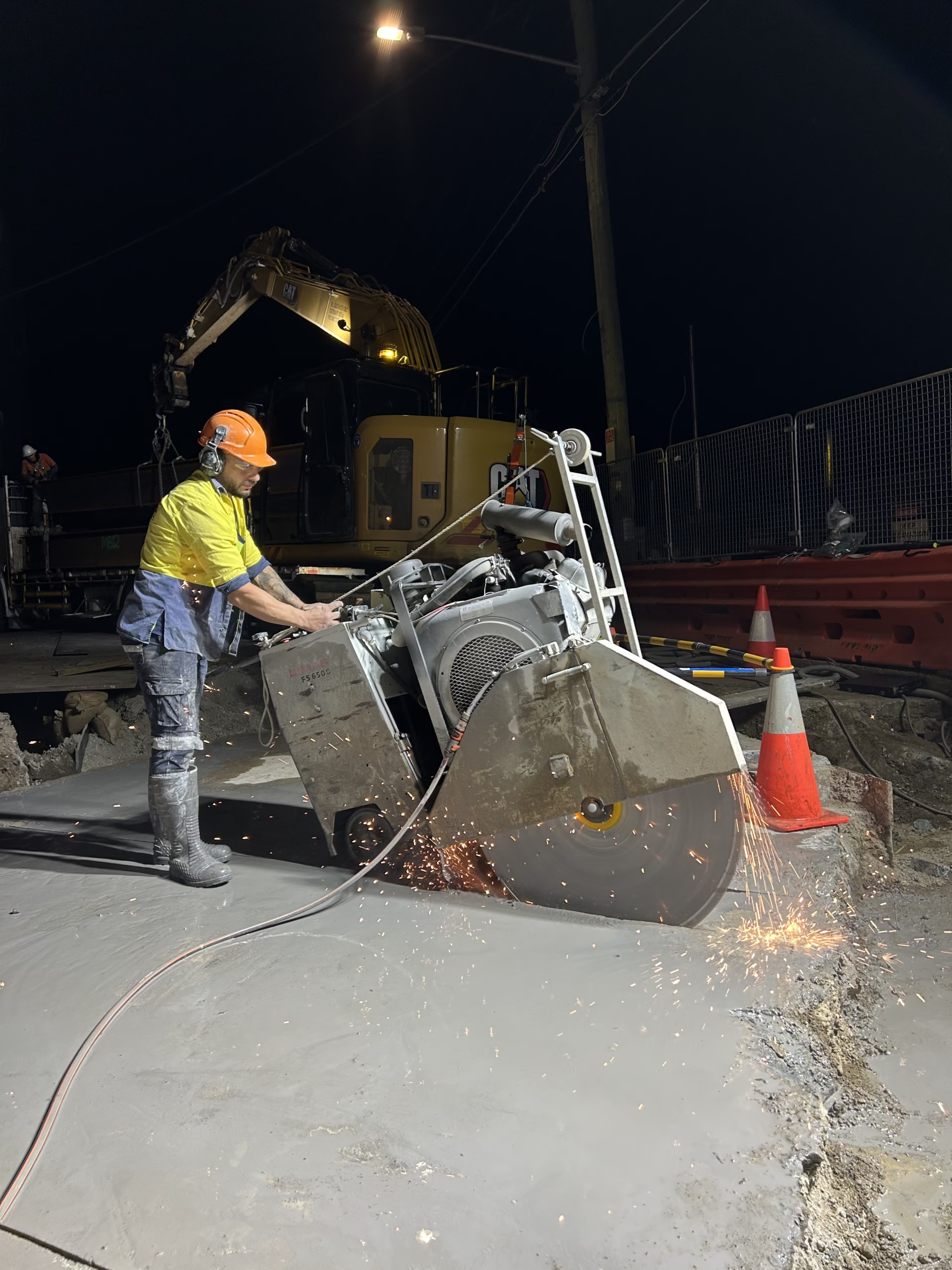
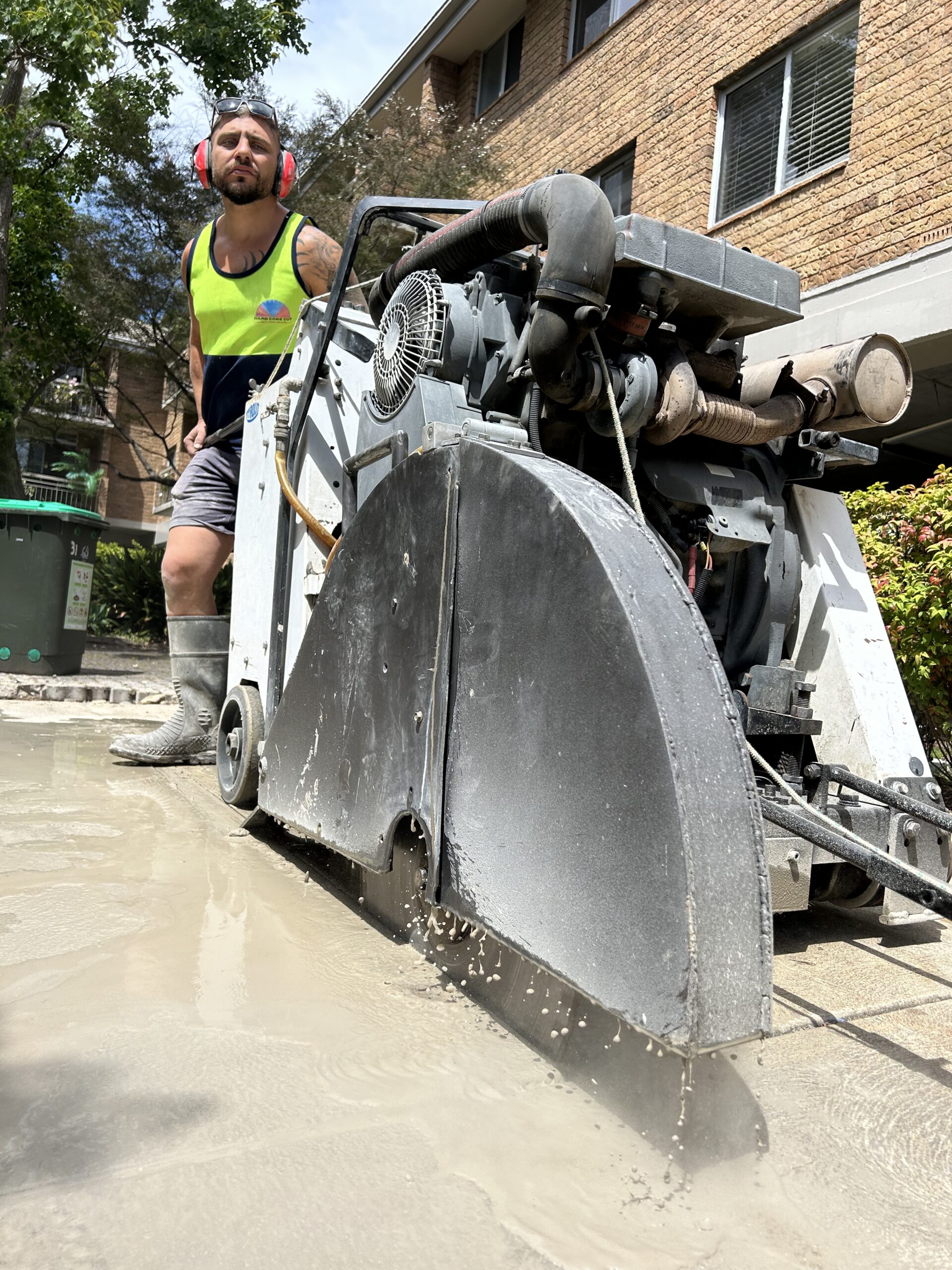
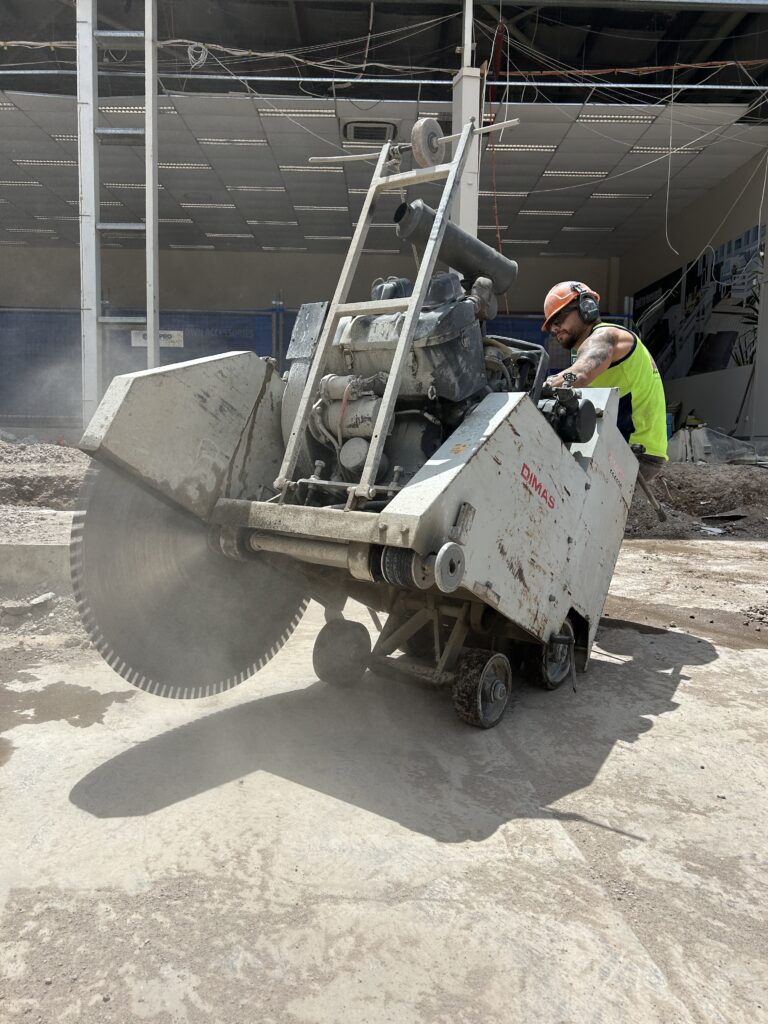
A roadsaw typically uses a large diamond blade mounted on a self-propelled or push-operated machine. The blade cuts downward into the surface while water is usually applied to cool the blade and control dust.
When would you use a roadsaw?
Roadsaws are used whenever you need long, straight, accurate cuts in horizontal concrete or asphalt surfaces.
Common applications include:
- Roadworks – removing sections of pavement for repairs or utility access.
- Concrete slab removal – cutting slabs into manageable sections for demolition.
- Utility trenching – creating trenches for water, sewer, gas, electrical, or telecommunications services.
- Expansion and contraction joints – installing or repairing joints in concrete pavements.
- Bridge deck repairs – cutting out damaged concrete sections.
- Airport runway maintenance – precise pavement removal and repair.
- Industrial floors – cutting openings, pits, and service channels.
- Kerb and gutter removal with a road saw (floor saw) is a common concrete-cutting task used before demolition, replacement, road widening, driveway construction, drainage upgrades, and civil works.
Advantages of a roadsaw
- Cuts much deeper than most handheld saws.
- Produces long, straight cuts with good accuracy.
- Faster and more efficient on large areas.
- Can handle both concrete and asphalt.
- Suitable for high-production work.
Typical cutting depths
The depth depends on the machine and blade size:
- Small roadsaws: approximately 100–200 mm (4–8 in.)
- Medium roadsaws: approximately 200–350 mm (8–14 in.)
- Large diesel or hydraulic roadsaws: 500 mm (20 in.) or more in some applications
Roadsaw vs. handsaw
Roadsaw | Handsaw |
Used on horizontal surfaces | Used on walls, slabs, and confined areas |
Long straight cuts | Shorter or more detailed cuts |
Greater cutting depth | More portable |
Higher production rate | Better access in tight spaces |
Example
If a contractor needs to remove a 30-metre section of reinforced concrete roadway to install a new stormwater pipe, they would typically use a roadsaw to make two parallel cuts along the length of the trench before excavating the concrete between them.
In concrete-cutting projects, a roadsaw is generally the preferred choice whenever the work involves large-scale cutting of concrete or asphalt surfaces at ground level.
The weight of a roadsaw (floor saw/flat saw) varies significantly depending on its size, power source, and cutting capacity.
Typical ranges are:
Roadsaw Type | Approximate Weight |
Small electric roadsaw | 80–200 kg |
Small petrol roadsaw | 100–250 kg |
Medium self-propelled roadsaw | 250–700 kg |
Large diesel roadsaw | 700–2,000+ kg |
Heavy-duty highway/airport roadsaw | 2,000–6,000+ kg |
Examples
- A small electric floor saw used indoors might weigh around 120–180 kg.
- A medium diesel self-propelled saw commonly used by concrete-cutting contractors may weigh 500–1,200 kg.
- Large highway-cutting machines with 1 m+ diameter blades can weigh 2–6 tonnes or more.
Why are roadsaws so heavy?
The weight helps:
- Keep the blade stable and straight during cutting.
- Increase cutting efficiency by applying downward force.
- Reduce vibration and blade wandering.
- Allow deeper cuts in reinforced concrete and asphalt.
Transport considerations
- Small roadsaws can often be loaded into a trailer using ramps.
- Medium roadsaws are usually transported on plant trailers.
- Large roadsaws generally require a truck, tilt tray, or machinery trailer and may need mechanical loading equipment.
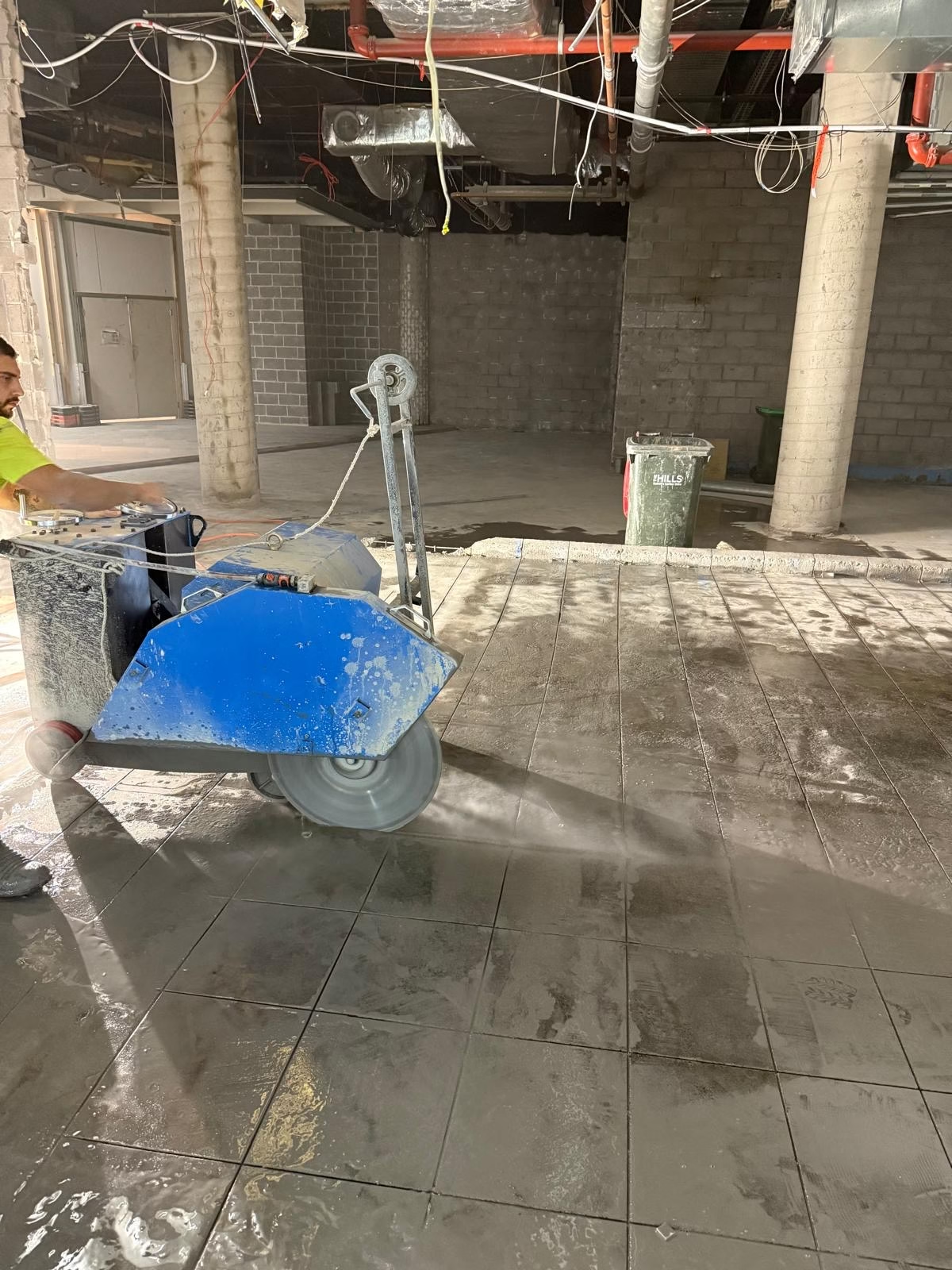
Electric Roadsaw
Best for:
- Indoor concrete cutting
- Warehouses
- Hospitals
- Data centers
- Food-processing facilities
- Areas with strict noise or emission requirements
Advantages
- No exhaust fumes
- Lower noise levels
- Lower maintenance
- Suitable for occupied buildings
Disadvantages
- Requires access to electrical power
- Less portable
- Usually lower power than large diesel models
Many electric roadsaws use three-phase power and are common for cutting factory floors and indoor slabs.
Petrol Roadsaws
Best for:
- General construction projects
- Footpaths and driveways
- Small road repairs
- Utility installation work
Advantages
- Portable and self-contained
- Easy to transport
- Good balance of power and mobility
Disadvantages
- Produces exhaust emissions
- Higher fuel costs than electric power
- Usually less powerful than large diesel machines
Petrol roadsaws are often used by contractors for everyday concrete and asphalt cutting jobs.
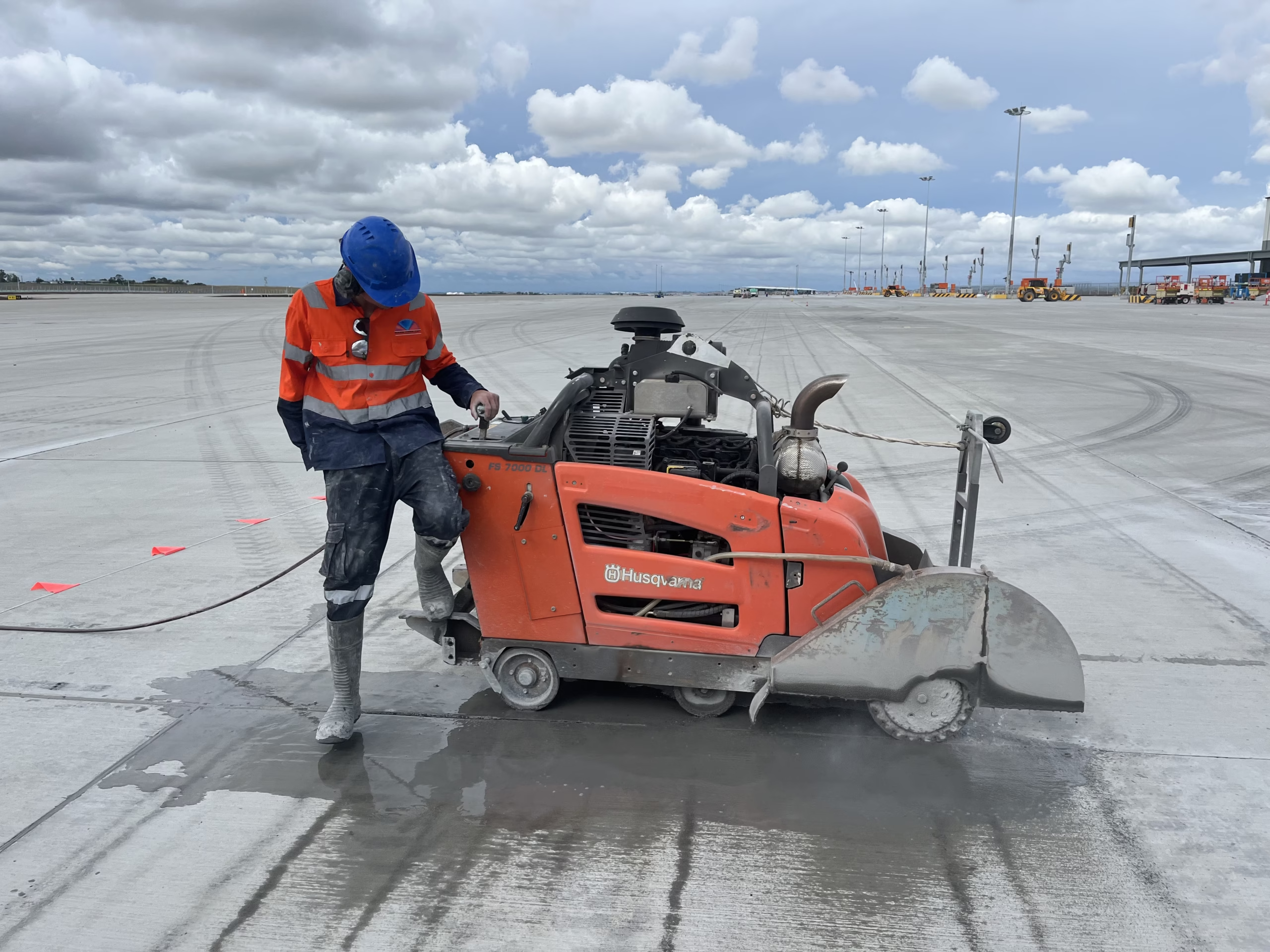
Diesel Roadsaws
Best for:
- High-production road cutting
- Airport runways
- Bridge works
- Major infrastructure projects
- Deep cutting in reinforced concrete
Advantages
- Highest power output
- Deepest cutting capability
- Excellent for continuous operation
- Well suited to large diamond blades
Disadvantages
- Heaviest machines
- Highest noise levels
- Exhaust emissions
- Higher transport and maintenance requirements
Large diesel roadsaws are commonly used when cutting depths exceed what smaller petrol or electric units can efficiently achieve.
Choosing between them
A contractor would typically choose:
- Electric roadsaw when working indoors or where fumes are unacceptable.
- Petrol roadsaw for general outdoor construction work where portability is important.
- Diesel roadsaw for large-scale infrastructure projects, deep cuts, and high-production operations.
For example:
- Cutting a trench through a warehouse floor → electric roadsaw.
- Cutting expansion joints in a driveway → petrol roadsaw.
- Removing sections of a highway or bridge deck → diesel roadsaw.