
Slurry Control and Cart Systems
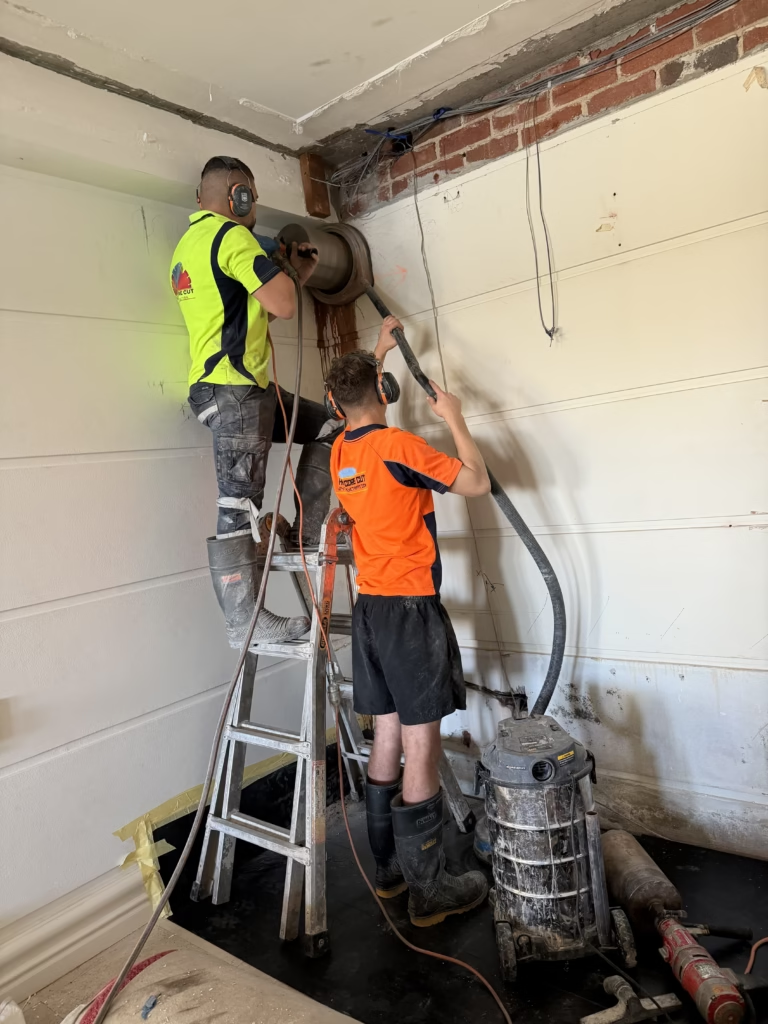
Slurry control in concrete cutting is the process of preventing concrete slurry from escaping into the environment and work area, while safely collecting and disposing of it. Concrete slurry is created when water is used to cool diamond tools during:
- Core drilling
- Wall sawing
- Wire sawing
- Hand sawing
- Floor sawing
- Grinding
Concrete slurry is a mixture of:
- Water
- Concrete dust
- Cement particles
- Sand and aggregate fines
- Sometimes trace contaminants
Why Slurry Control Is Important
Safety
- Creates slip hazards
- Can hide trip hazards
- Makes work areas messy
Site Requirements
Many commercial, government, rail, and bridge projects require strict slurry containment and disposal procedures.
Common Slurry-Control Methods
Slurry Rings and Water Collection Systems
Often used for core drilling.
- Rubber collection rings attach around the drill bit.
- Water and slurry are captured before reaching the floor.
- Connected to a slurry vacuum.
Slurry Catch Tarps
Common in bridge and elevated work.
- Tarps are suspended beneath the work area.
- Capture slurry and concrete debris.
- Prevent contamination of waterways, roads, rail corridors, or public areas.
This is similar to the bridge slurry-catching tarp setup you asked about previously.
Wet Vacuums / Slurry Vacuums
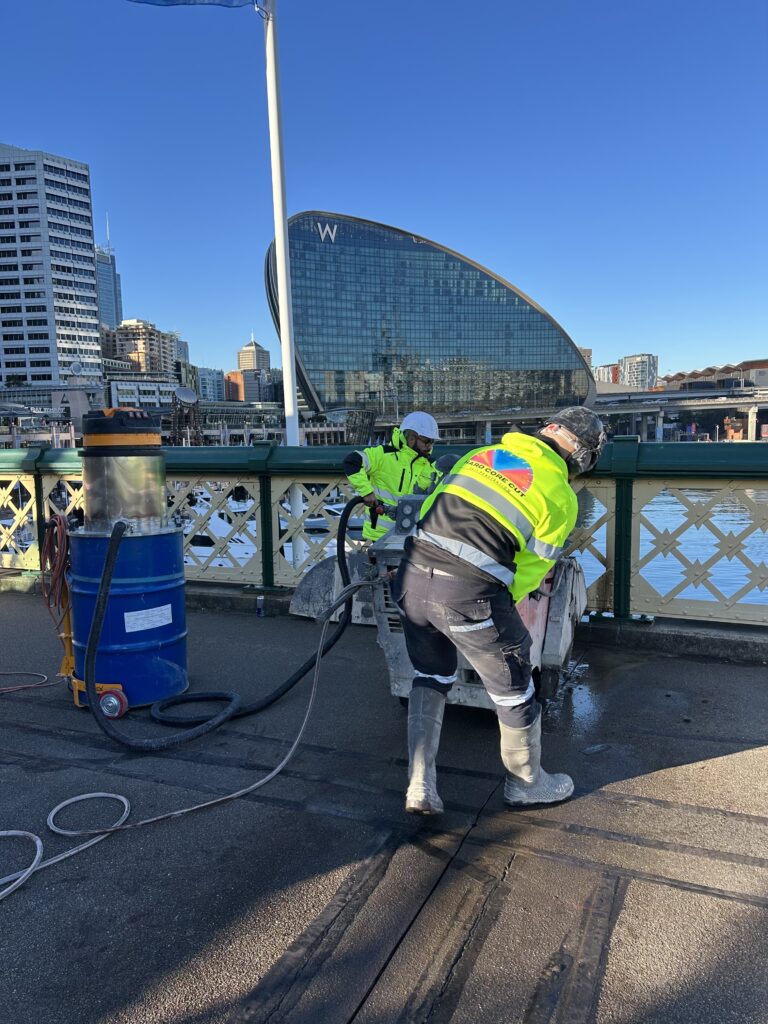
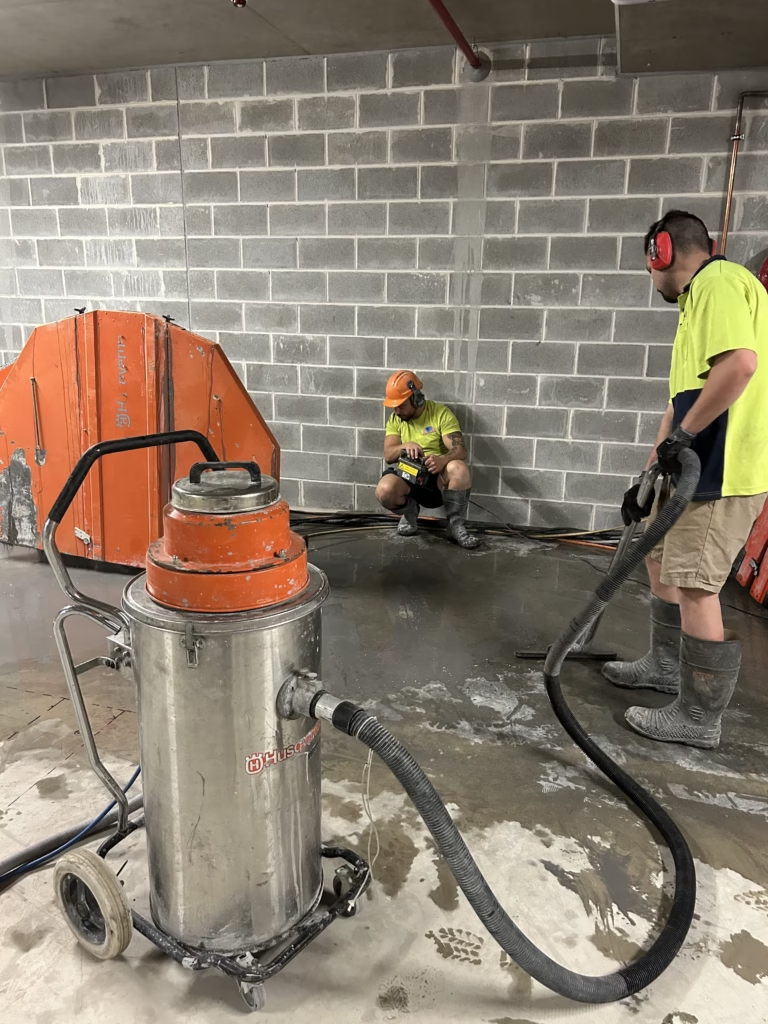
Used to collect slurry as it is produced.
Popular systems are available from companies such as Hilti Australia and Husqvarna Construction.
Bunding and Containment
- Sandbags
- Foam bunds
- Plastic barriers
- Temporary dams
Used to prevent slurry migration.
Slurry Separation Systems
Large projects may use:
- Settlement tanks
- Filter presses
- Recycling systems
These separate solids from water before disposal.
Slurry Control for Different Services
Service | Typical Slurry Control |
Core drilling | Slurry ring + wet vacuum |
Hand sawing | Wet vacuum + bunding |
Wall sawing | Catch trays + vacuum |
Wire sawing | Containment barriers + collection pit |
Bridge work | Suspended tarps + vacuums |
Example: Bridge Core Drilling
If a crew is core drilling through the side of a bridge over water:
- A containment tarp is installed beneath the work area.
- Slurry rings are fitted around the drill.
- A wet vacuum collects water at the source.
- Any residual slurry falls into the containment tarp.
- Waste is collected and disposed of according to environmental requirements.
Signs of Good Slurry Control
✅ No slurry entering drains or waterways
✅ Work area remains clean and safe
✅ Water collected at the source where possible
✅ Proper waste disposal records maintained
✅ Minimal cleanup required after cutting
For many modern concrete-cutting contractors, especially those doing bridge and infrastructure work, slurry control is now considered just as important as the cutting itself.
Why Clients Pay Attention to It
Good slurry control:
- Helps win government and infrastructure contracts.
- Reduces cleanup time.
- Keeps environmental inspectors happy.
- Improves professionalism and site safety.
For many commercial and bridge projects today, slurry control isn’t optional—it’s considered a core part of professional concrete-cutting operations alongside core drilling, wall sawing, wire sawing, and chainsawing.